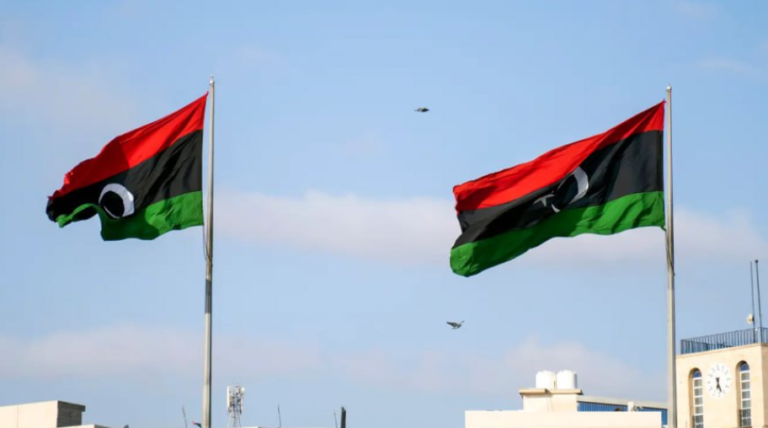
Libya has plunged into deeper economic and political turmoil after the eastern government, led by Osama Hamad, declared force majeure on all oil fields and ports, effectively halting the country’s oil production and exports. This drastic move follows the Presidential Council’s controversial appointment of Abdelfattah Ghaffar as the interim governor of the Central Bank of Libya (CBL), causing widespread uncertainty and concern over the functioning of the country’s banking system.
Libya is experiencing divisions never seen before, since the Fall of the regime of Muammar Gaddafi in 2011. The most severe issues include civil wars, the closure of oil fields—the country’s only source of income—and the latest conflict over the Central Bank of Libya between political factions, which could further worsen the country’s economic situation. The country’s affairs are managed by two governments: one in Tripoli (west), led by Abdulhamid Dabaiba, and the other in the east, headed by Osama Hamad, supported by the parliament and Khalifa Haftar.
### Banking Crisis and Force Majeure Declaration
At the center of this storm stands Sadiq al-Kabir, a man who has held an iron grip over the Central Bank of Libya for more than a decade. Al-Kabir, once seen as a steward of Libya’s financial stability, is now viewed by many Libyans as the embodiment of corruption and unchecked power. His tenure has been marked by accusations of mismanagement and the siphoning of the nation’s wealth, fueling widespread resentment among the Libyan populace.
In response to the ongoing crisis, the Presidential Council announced on August 20 the appointment of Mohamed Shukri as the new governor of the Central Bank. However, this decision was immediately rejected by both the House of Representatives and the High Council of State. Following this, the Presidential Council further escalated the situation by appointing a new board of directors for the Central Bank and assigning Abdelfattah Ghaffar to lead it. This was seen as a direct response to the eastern Parliament’s decision to end the mandate of the Presidential Council and the interim Government of National Unity, led by Abdulhamid Dabaiba in the west.
It is against this backdrop that the Tobruk-based Speaker of Parliament, Aguila Saleh, has insisted that oil and gas flows will remain blocked until al-Kabir resumes his duties—a demand that has only deepened the crisis. Saleh criticized the Presidential Council’s appointment of Mohamed Shukri as an “illegitimate” governor and condemned the formation of a new board of directors for the CBL, arguing that it violated parliamentary authority and disregarded the will of the Libyan people.
Saleh emphasized that any political settlement must ensure that all regions have access to Libya’s resources. He blamed the Presidential Council for the confusion within the banking sector, leading to threats, kidnappings, and extortion against CBL employees.
### International Banking Relations and Dollar Operations
The crisis has far-reaching implications, especially concerning Libya’s foreign-based financial assets. The Central Bank of Libya holds significant stakes in two strategic foreign banks: the British Arab Commercial Bank in England and the Arab Banking Corporation (Bank ABC) in Bahrain. These institutions handle critical financial transactions, including the deposit of dollar revenues from hydrocarbon sales and the processing of letters of credit.
However, these banks have put operations on hold, awaiting a final decision from major U.S. banks on whether to recognize Ghaffar as the lawful governor of the CBL. Until then, dollar operations remain suspended, exacerbating the financial crisis.
Western Union Halts Operations in Libya
In a related development, Western Union has suspended all operations in Libya, further deepening the financial woes of many Libyan families. This suspension is directly linked to the Presidential Council’s decree issued on August 18 and reflects the increasing instability in the country’s financial sector.
United Nations and International Reactions
The United Nations Support Mission in Libya (UNSMIL) has responded by convening an emergency meeting to address the escalating crisis at the CBL. The mission has warned that unilateral decisions could lead to financial and economic collapse and has urged all parties to suspend such decisions, lift the force majeure on oil fields, and ensure the safety of CBL employees.
The U.S. has expressed support for the UN’s initiative, emphasizing the importance of restoring economic and financial stability in Libya. The U.S. embassy in Tripoli also condemned the intimidation of CBL employees and called for accountability for those responsible.
The UNSMIL hosted separate talks in Tripoli between representatives of the House of Representatives and the High Council of State, alongside the Presidential Council. These discussions, described as candid, led to significant understandings on resolving the CBL crisis and restoring confidence in the institution among Libyans and international partners.
By the end of the session, participants agreed to present the outcomes to their respective councils for further consultation, with plans to finalize an agreement on Tuesday.
Presidential Council Stands Firm
Despite the mounting pressure, Presidential Council President Mohamed Menfi has reaffirmed the validity of the Council’s decisions regarding the CBL appointments. Menfi challenged the parliament to fulfill its neglected role by convening a legal session in consultation with the State Council, as per the political agreement’s outcomes.
Libya’s ongoing financial and political crisis has reached a critical juncture, with the Central Bank of Libya at the heart of the conflict. As the country’s only major source of income, the closure of oil fields due to the force majeure declaration has further strained an already fragile economy. With international banks and institutions closely monitoring the situation, the outcome of the UNSMIL-led negotiations will be crucial in determining Libya’s economic future and the stability of its central banking system.
Annunci